High-end editing in TYPO3: Changing backend data with dynamic TCA
Hiring a TYPO3 agency for every small change can add up to a considerable cost factor. Our aim is to give our customers the opportunity to work more freely in their everyday lives, thereby saving costs and valuable time. That's why we have implemented a solution for our customer futureSAX that makes it possible to flexibly create fields in forms and to change all this form data in the backend at a later date.
Forms in TYPO3 & dynamic TCA entries
The Table Configuration Array (TCA), a core architecture of TYPO3, defines how TYPO3 uses which database fields and tables. Editors can then directly edit data records in the backend whose fields are configured via TCA.
Table Configuration Array
The Table Configuration Array, TCA for short, is a central concept in TYPO3. It is a configuration file or a configuration structure that contains the definition of database tables and their fields. It enables developers to control the structure and behaviour of database tables and forms in the backend. The TCA thus offers a flexible way of organising and adapting data in TYPO3 to meet the individual requirements of websites and applications.
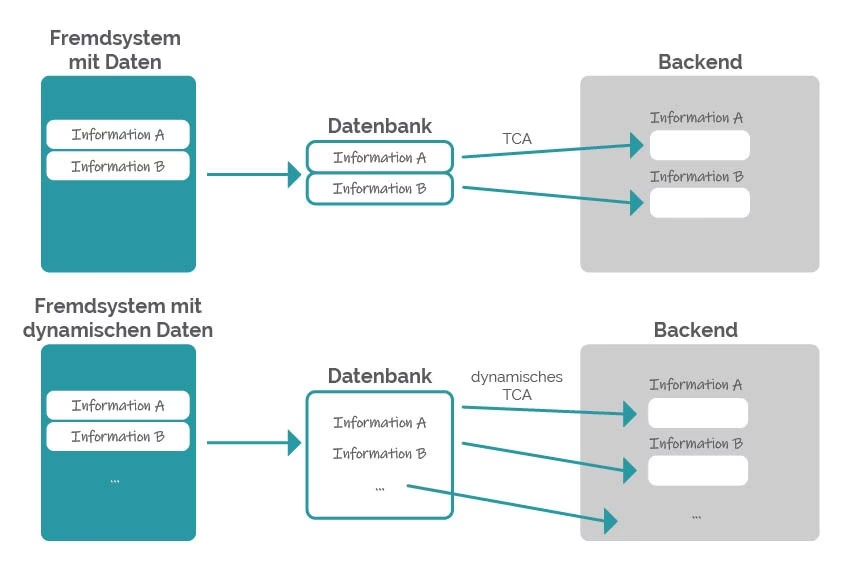
In general, a form field in the TYPO3 backend is assigned to exactly one field in the database - the form and database are therefore permanently defined. If a new field is added to the form on the website, the editor should be able to edit the data from this field independently in the backend later on. We have therefore specified that the changeable fields of a form in the front end, which can therefore be dynamically adapted, correspond exactly to a data record in the database. Using the json format, we can now dynamically create the TCA fields in the backend. The json, which is located in a database field, is automatically generated from the form created by futureSAX (backend).
Nothing is impossible
Special customer requirements are always met with customised solutions. In this case, we were able to prove that nothing was impossible. If the customer also benefits from the solution and saves costs and time, then everyone wins. The advantage of this solution summarised once again:
By assigning all form fields in the front end to a data record in the database, complete freedom is given for subsequent editing of the form fields in the back end. In the standard case of a TYPO3, the connection of external data sources would be static and would have to be adapted each time the structures of these sources were changed. With our solution, the TYPO3 data records adapt dynamically to external changes.
Conclusion: The customer does not need us for his customisations and we can devote ourselves to the customer's other challenging projects.